

Competitors with a realistic perspective will usually admit that you can’t win them all. If their outlook is healthy, they will also recognize that one could wear themselves out if they tried to win in too many categories. Comparisons between the apples and oranges of success in any given field often leads to frustration. First of all, there are no clear guidelines separating specialties within the broader areas of expertise. As the competitor cordons off a subcategory to ‘win’, they’ll invariably wind up moving their borders inward as they concede ground to their competitor’s superior talents and acumen. This can lead to self-isolation in terms of association within a specific professional field. Another important consideration to make while deciding which strategy to employ, competitiveness vs cooperativeness, is how much real world influence you hope to enjoy when you finally ‘beat’ all of your contemporaries and take home the First Place prize within your specialty. Here is where cooperativeness breaks away from the competition and authors its own competitive edge. Cooperation allows for others to succeed in unison with your own successes. A cooperative professional can now participate wholeheartedly in the celebratory ceremonies acknowledging the successes of one’s associates in their field. Cooperation allows across the board beneficence of success; If we’re working as a team, we all get to enjoy breakthroughs together.
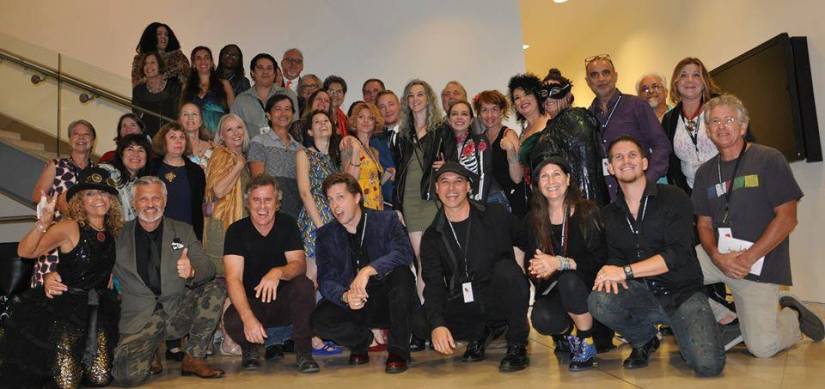
The whole gang of ‘cooperative of artists’ participating in the 2018 Exquisite Corpse Games, St. Petersburg, Florida.
From a personal perspective, cooperation implies progressiveness for all members of the cooperative. Generosity, acceptance of others, flexibility, intuitiveness, and open communication, are all apparently principles that form the basis for cooperation. Having met many artists who are self-declared ‘competitors’ in the field of art, I have come to the conclusion that it would be absolutely exhausting for me, if the motivations for making my artwork were locked in constant competition with the creative motivations of other artists. If I were competitive with other artists, it would also imply that every time one of my contemporaries enjoyed a breakthrough or a win, I would simultaneously experience a loss. This would fly in the face of my constant gratitude for the abundance of all things.

Limited Edition bronze, “American Dream Catcher” belt buckles.
Within the nature of competitiveness, there is an undercurrent of exclusivity. It implies that there is no room for two or more #1 competitors. For one to rise, another must fall. If you are winning, I’m losing. If you’re succeeding, I am failing. The competitive strategy makes no accommodation for mutual success. Tied scores must always be broken.
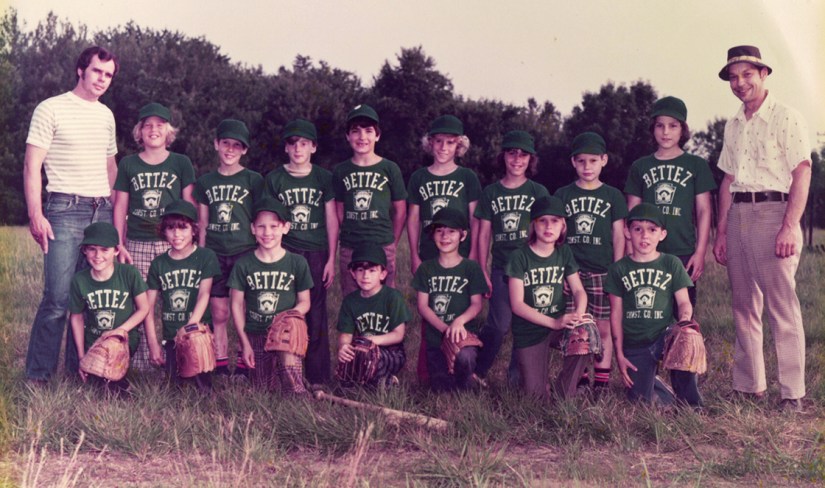
As a member of a ‘Bad News Bears’-style farm league baseball team, I was taught by the coaches that enjoyment of the game was more important than winning. My recently deceased father, Timothy Otto Moore, was head coach, to the left, and I am posed right of center, top row. We didn’t win very often, but we sure had fun trying!
There are so many reasons to take a cooperative approach to our careers, our relationships and our daily affairs in life, but I must confess that my favorite reason has to do with connectivity with other human beings. When I am open and inclusive toward others, more often than not, they afford me the same considerations. This approach can be risky of course. Putting yourself and your ideas out there can lead to antagonistic criticism from self-perceived competitors, getting your coat tails ridden by opportunists, and worst of all, having your successes stolen away by plagiarists and impostors. Even after an in depth investigation of all perceivable drawbacks to the cooperative approach, I still prefer it over the short-lived glory of winning the competitive way.
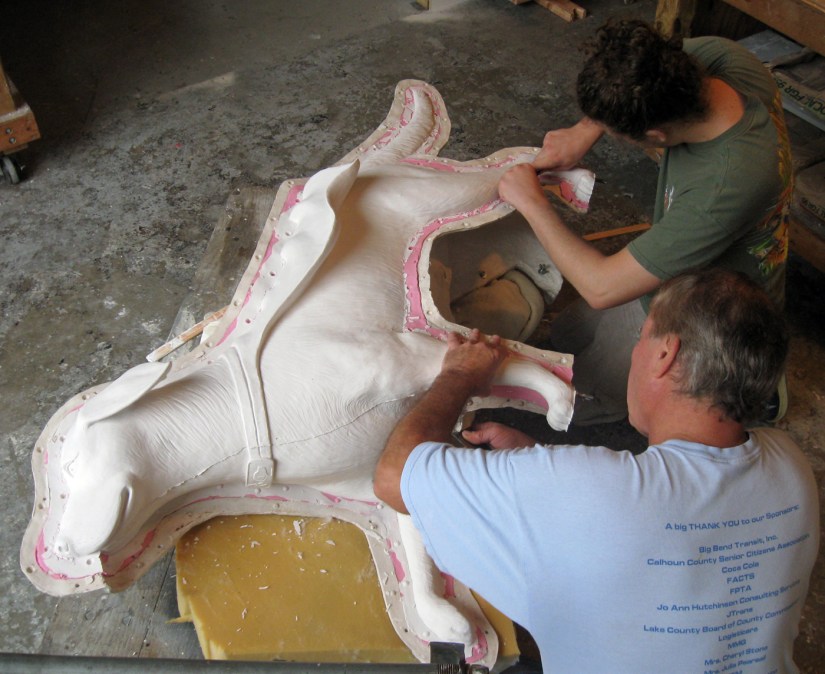
Fred McKenna and Christopher Moore were both hardworking members of the Moore Art Expressions production team. We produced hundreds of castings together over the years, and yet we always managed to stay focused on the mutual goals of the team. Cooperative teamwork, perhaps?
Thank you for reading this journal entry! As usual, I’d like to express my appreciation and gratitude for all of the amazing influences that I’ve been blessed with in this lifetime. From role models and mentors, to friends and family, I will always be thankful for your gracious support! Please consider following this blog to receive email notifications when I write a new post. And please remember, I will always welcome cooperative comments and constructive criticisms with open arms, but I’ll also step up to the line for a high spirited competitive debate!

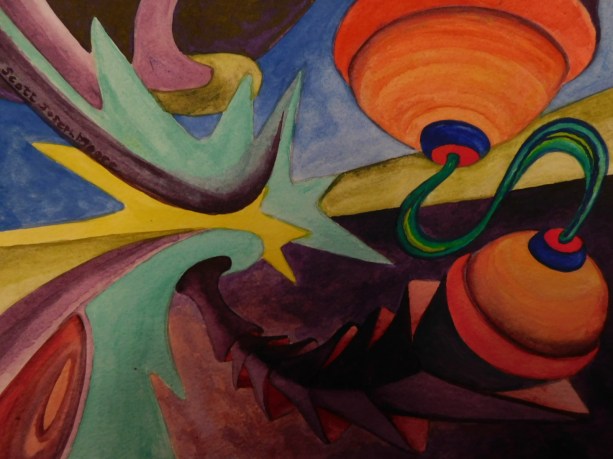 “Connectivity” – Watercolor study exploring the concept of collective consciousness.
 Through the challenges and victories of our compassionate life experiences, we are inspired to growth, encouraged to excellence.


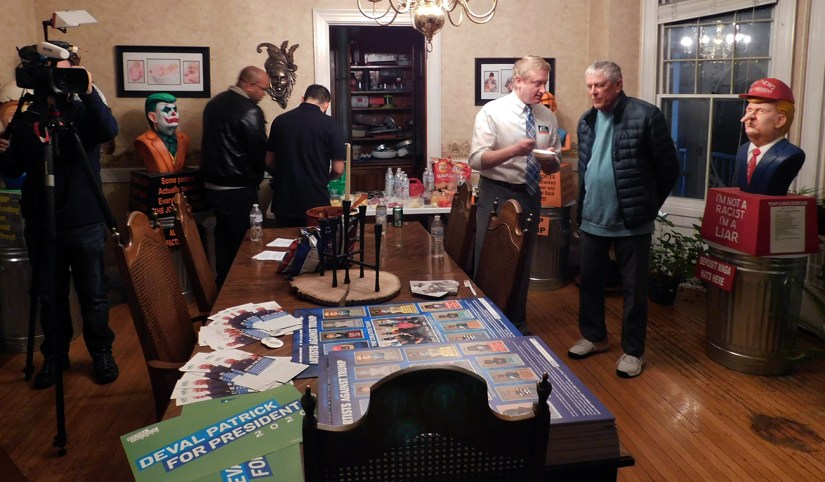 On our first evening in New Hampshire, we set up the display at Carlos Cardona’s home, where he hosted an event for the Democratic Party in Laconia. In this photo, Mike is talking to Dan Feltes (Democrat running for Governor of NH) while the Reuters cameraman records the proceedings.
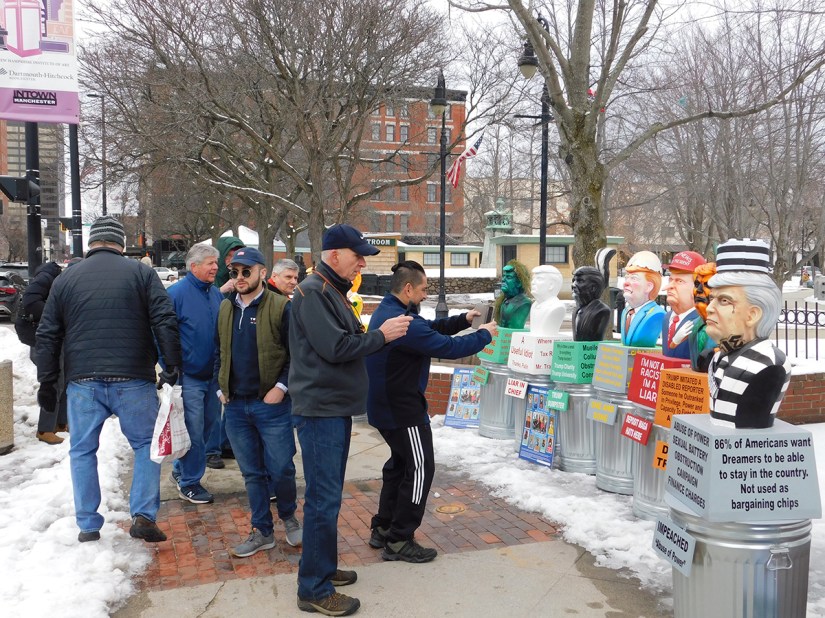 The artwork enjoyed a favorable welcome by most of the media and passersby at the Artists Against Trump Exhibit in Manchester, New Hampshire, on 2/8/2020. This was an ad-hoc showing of the exhibit, which could be best described as a guerilla-marketing inspired event. The temperature never rose above 20 degrees, with gusty winds delivering a wind chill in the single digits. The fact that we were politically unendorsed, left us open to the ridicule of those who didn’t share our enthusiasm for the message we were promoting. One of the most memorable encounters – A young man walked up to Mike and me and asked, “Are you two guys responsible for this?” Following our affirmative reply, he made the judgmental assertion that we were “Both f***ing losers!” As he walked off down the sidewalk without ever breaking his stride, I couldn’t help but notice that he was wearing worn out clothes with a considerable amount of what appeared to be chocolate stains on the seat of his pants. I thought to myself ‘If that is what winning looks like, I’d prefer to remain a f***ing loser.’ Instinctively, I nearly lost my cool and went after the man, but I decided that it would be a nonproductive strategy, as I was sure he wouldn’t change his attitude no matter what methods I used to convince him.



 A True Story, as Yet Unfolding...