Film Journey

Return to Hope #2

Production of a Portfolio Film – Post #2 Concept Development

The first steps toward concept development have been taken, but the process of refining the concept and zeroing in on the message I’m attempting to convey will continue throughout the production of the film. It’s possible that it may even require some tweaking during the post-production phase of the project. Let’s not get ahead of ourselves though, post-production is at least two months away!

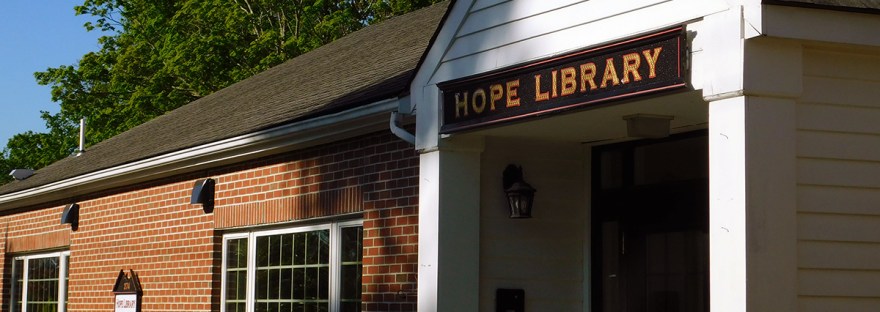
So, the seeds of awareness were planted more than fifty years ago, at the edge of the Hope Mill spillway while I watched the unnaturally vibrant colored water flow by. The whole experience was my first exposure to the deceptive qualities of industrial ill intent. The mill owner, or maybe it was the manufacturing tenant who was renting the space, had made the decision to put profits over public welfare and may have also knowingly endangered the health of the environment we depend on to live. I wish I could report that this was a onetime experience, and that I never witnessed another business doing the same thing, but, in all honesty, I cannot make those claims. I lived in Hope until I was fifteen and explored the wooded banks and waterways of the Pawtuxet River as far downstream as the Phenix Sportsmen’s Club in West Warwick, and all along its route there were businesses and mills polluting its waters. The EPA was established by President Nixon in 1970. Much of the pollution I’ve been describing here was curtailed after the federal regulations were set in place. Unfortunately, some of the damage that was done during the heyday of the industrial revolution has yet to be, and may never be, repaired.

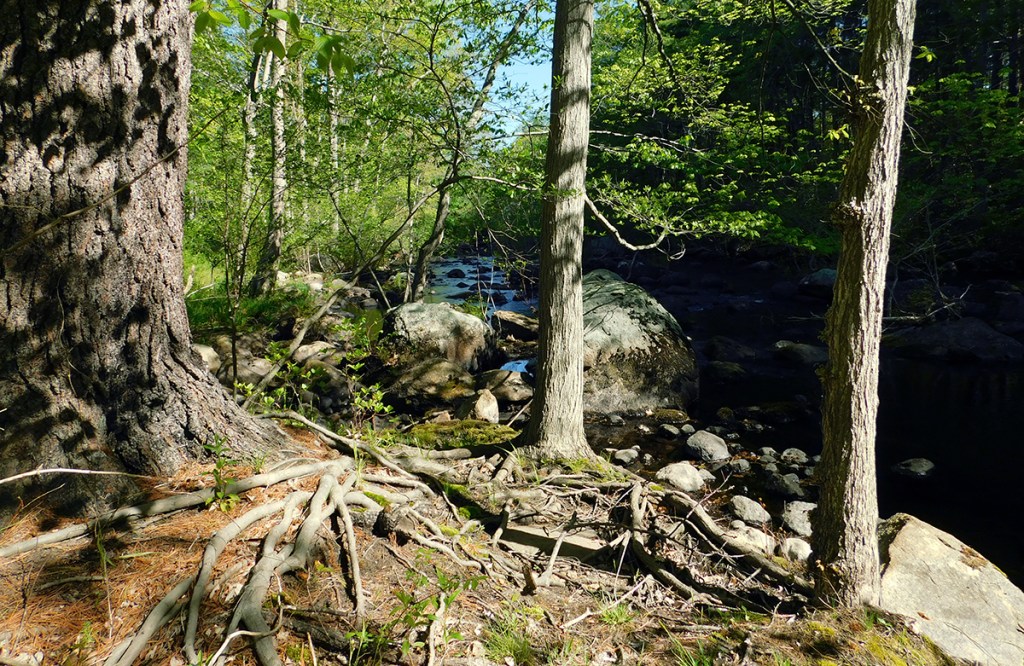
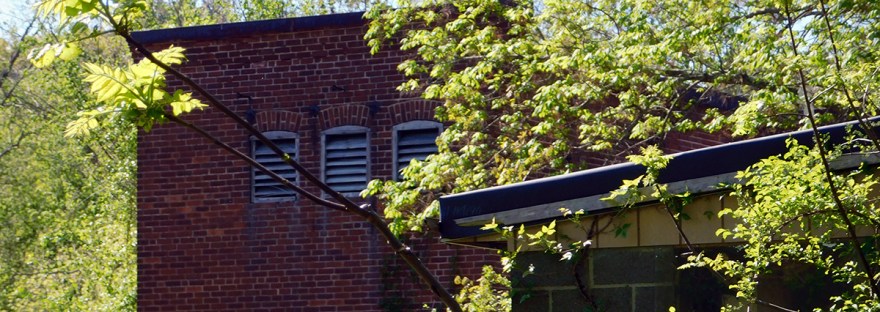
Somewhere Along the Banks of the Pawtuxet” – June 2022

The production of this film will involve a delicate balancing act between exposing the intentionally destructive choices human beings have made (some having caused irreparable harm), and our ability to redeem ourselves and our environment by making wise decisions and sending forth positive healing intentions. Personally, I refuse to give up on hope. And yes, I am referring to the Village of Hope where I grew up, and to the aspirations I now embrace. Aspirations to restore humanity’s hope for a happier, healthier future for us all.

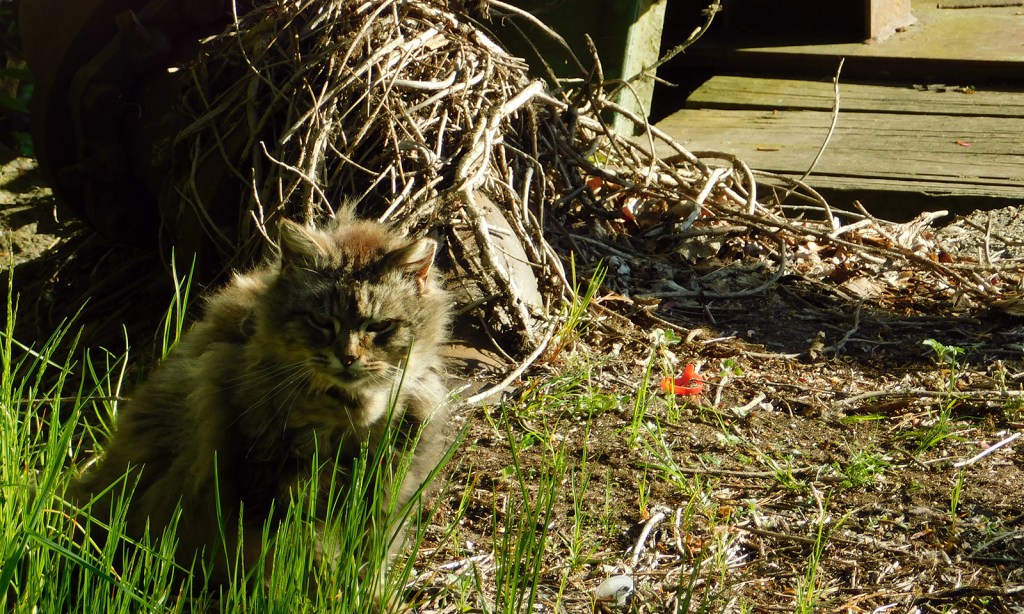
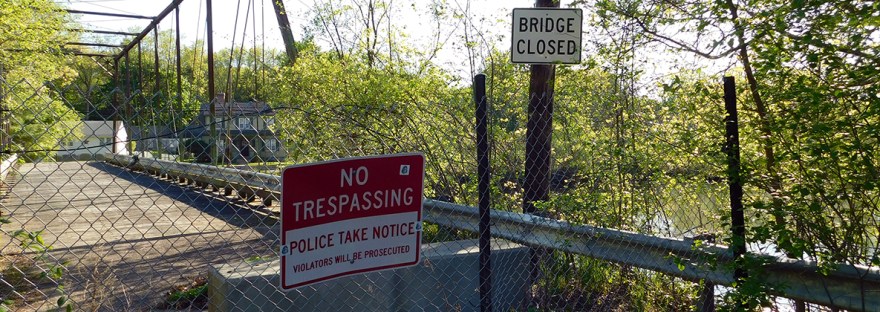
“Homeless Cat, Under the Arkwright Bridge” – Arkwright, RI, June 2022 (the bridge was built in 1888)

I’ll delve deeper into the process of concept development for “Return to Hope” tomorrow. And, in case you’re wondering, I’m hoping that by the end of October, I’ll be able to start previewing the first film clips from the project. Thanks for stopping by to read the Grand Providentia United blog! As usual, all comments and critiques are welcomed and appreciated. Please subscribe if you would like to receive notifications when I make a new journal entry!

Film Journey

Return to Hope #3

Production of a Portfolio Film – Post #3 Unexpected Production Delay

Here and now, I am returning my focus to the making of “Return to Hope” (the portfolio film that I’m producing as part of the application process to the MFA program at the Savannah College of Art and Design). To any readers who have been patiently waiting for my attention to return to this blog, I feel obliged to offer you an apology and an explanation. Please accept my apology for having left you hanging for so long. I confess that it has been twenty-three days since my last journal entry. Please know that my deepest intentions are now motivating me to write regularly here from this day onward, at least until the project is complete. The reason for my absence was as simple and ordinary, as it was difficult and unexpected. Some of you may recall that my roommate unexpectedly informed me that she would be moving out and breaking her lease on the apartment where I was renting a room from her (see my post on September 26th for the details on that bombshell). She went on to declare that she would be moving out within two weeks. This left me in the precarious position of having to find a new room to rent from someone else, or entering into a lease contract with her, her boyfriend and his friend. I could not even imagine signing onto a one-year lease with the three of them, because we choose to live completely contradictory lifestyles. Without going into details, let me summarize our differences this way: while I am practicing making healthy lifestyle choices, they are living habitually unhealthy lifestyles. So, the explanation for my absence is that I needed to turn my attention to finding a new place to live, moving out of that unhealthy living situation, and moving into a more positive, and healthy, living arrangement. Well, I have found my new home, perhaps even until graduation from SCAD in the spring of 2025. I moved in over this past weekend and I’m excited to report that it’s the perfect place for me to thrive and create! Positive and progressive, healing and rejuvenating are terms I would wholeheartedly use to describe the atmosphere of the home I am now renting a room in. My new roommates are much more compatible and a lot less negative than my last roommate and I even have use of an outdoor space (backyard) that I didn’t have in my previous living arrangement. Now, I can get back to purpose. Reclaim the reigns. Move forward with the manifestation of destiny. Return to the “Return to Hope” project and continue the journey toward making the “Grand Providentia Projection” a reality.

A place to live and dream!

More to come, soon! Hopefully, tomorrow…

Film Journey

Return to Hope #4

Production of a Portfolio Film – Post #4 Concept Development

Just like story books, films normally have a layout consisting of a beginning (Setup), middle (Confrontation) and end (Resolution). The portfolio film “Return to Hope” will follow this format, except that it will bend the conventional formatting rules. And hopefully, it will bend the rules just enough to turn some heads and open some minds. This being the first film I’ve ever produced, and due to the fact that my admission to the college is dependent on its various qualities, intuition is telling me that I must push some boundaries in order to create something special and unique; something the admissions board will appreciate and respect. In this journal entry, I’ll be disclosing the basic format of this film and the way the concept will drive the contents of each of the three sections.

One of the first places that “Return to Hope” will break from the norm will be in the way that the beginning, middle and end relate to one another. I intend to enhance the distinctive qualities of each section until they are almost detached, in terms of visual and audio, while also maintaining a unified cohesiveness, binding the three sections together through the use of an underlying theme and the expression of a strong moral message. In most contemporary films, the middle is lengthy and filled with happenings, while the beginning and end are usually shorter, and yet more impactful, as they are the place where the writers are hoping to setup a conflict for the audience at the start, and then resolve that conflict in the end. For “Return to Hope” the three sections will be very similar in length, perhaps being exactly three minutes each. Many readers will recall that this film must be no longer than ten minutes, per order of the great and honorable Admissions Board. So, that will be nine minutes for the film, and I’ll leave the last sixty seconds available for credits and outtakes.

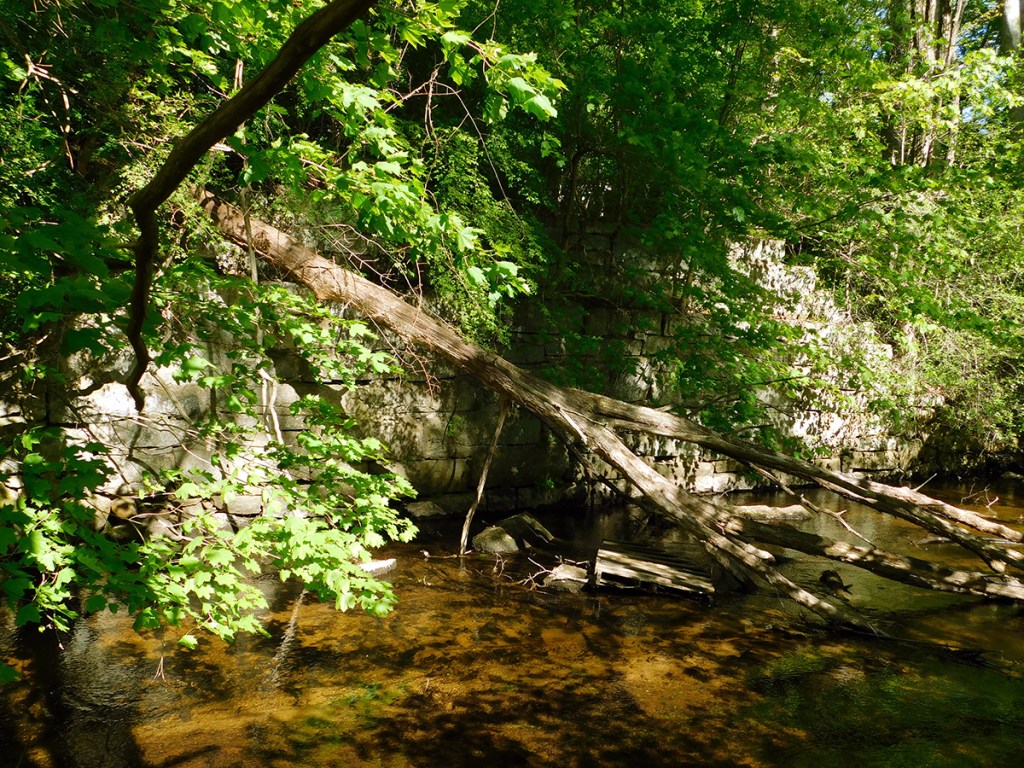
Railroads Once Crossed It” First river, Hope, June 2022

The setup (introduction) for “Return to Hope” will be narrated from the viewpoint of the trees. Yes, I realize how bizarre that may sound to some of you, but I’ve been communicating with many trees as of late, and they never fail to deliver a viewpoint that is far outside of the understandings of our collective human intellect. The trees are very aware of our dysfunctional behaviors and yet they have an undying belief in our capacity to heal the damage we have inflicted on the ecosystem of their home planet. Trees are serene and enduring. Most of the stresses trees will encounter are perpetrated by mankind, and still, they continue to filter our air and water without complaint or even mild opposition to our actions. They know that the human tendency toward destructive behavior is non-sustainable and irrational, and they know that ultimately it could lead to a disastrous collapse of the biosphere we all rely on for life itself. But always, the trees wait patiently for us to see the error of our ways. These are just a few of the many important reasons that I intend to give them a voice in this film.

“Hear Me, Know Me” Anonymous tree friend

In the next journal entry, I’ll continue to focus on the first section of the film. I’ll likely dedicate one or two entries for each of the three sections. Although they will only be three minutes each, in length, they will be complex enough in terms of visual and conceptual content that I expect they will require adequate explanation on my part. It is a win-win situation for the ego and the observer though, because all of the writing I do here is intended to be an integral part of the creative process for the final product. Now I ask you, how fun is this?!!!

Film Journey in the Now

Return to Hope #5

Production of a Portfolio Film – Post #5 Concept Development

Introduction (continued)

As I mentioned in yesterday’s entry, the first section of “Return to Hope” will be structured in a very similar manner to most contemporary films. This part of the film will be considered the setup (or introduction) to what comes after it. It will act to setup the confrontation (middle section) and together with the middle section, the introduction will pave the way for, and justify, the resolution (end). All three sections will be of equal importance, and I intend to give them each enough unique visual and audio content to allow them to stand alone on their own merits, but I will also employ enough ideological connectivity within the three sections to bolster the film’s comprehensiveness as a cohesive and holistic production. I will venture to say that “Return to Hope” is to be a micro-movie trilogy, where all three movies may be viewed within a nine-minute time frame. As I’ve already stated, I will be pushing boundaries.

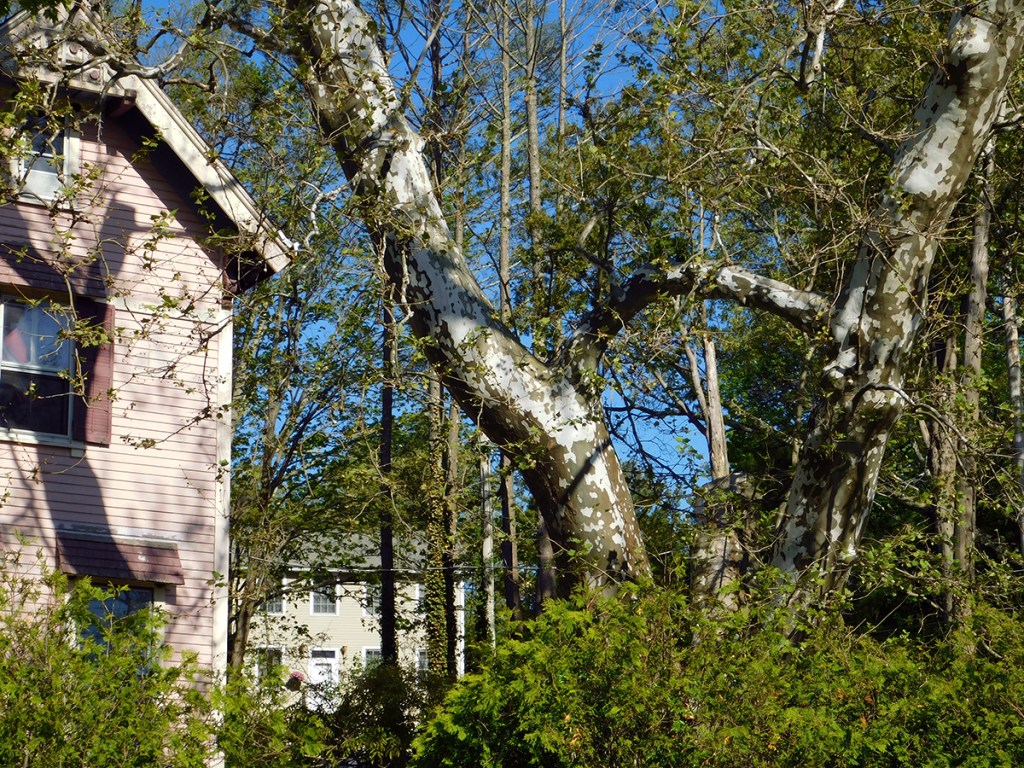
“Portal?” This tree is located directly across the street from Hope Mill. The house may have been the mill owner’s home. As a boy, I always wondered how the arch was formed. Back then I wondered about so many things. It was the wonder years, for sure!

In the last journal entry, I revealed that the opening narration for the film would be iterated by trees. The following is a rough version of what the trees will be communicating to us through “Return to Hope”.

Narration for Intro to “Return to Hope”

(Voiceover will be digitally altered to simulate multiple trees speaking to us)

Humanity’s strategy for the demarcation of time is intrinsically flawed, and therefore illusory.

Humans are inclined to seek the beginnings and the endings of every event in their short lives.

Our own perceptions of time and space are nonlinear, more cyclical and wavelike in nature.

We perceive an infinite multitude of singularities expanding and contracting presently.

It is always the present moment for us. There is no past or future event that concerns us.

All is unfolding precisely as it is meant to, and we trees have no desire to control potential outcomes.

We are one with all that is, all that has been, and all that will be, as it rises and falls, ad infinitum.

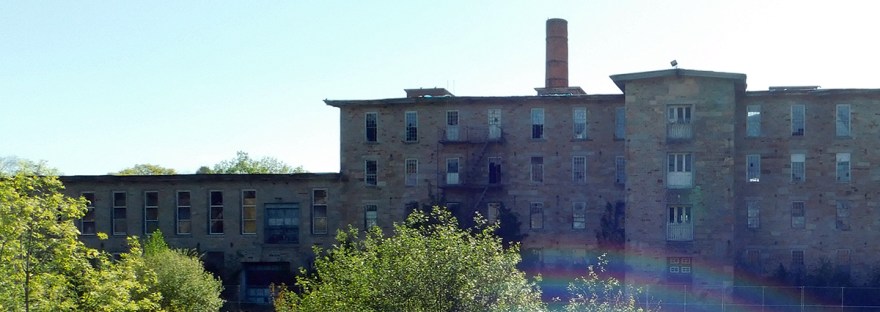
These lines will be delivered slowly and deliberately to the rhythm of film clips that are materializing and dissolving at a peaceful and calming rate. The imagery will alternate between film clips of magnificent trees and the now deteriorating Hope Mill. One of the elements that will draw the two subject matters together will be the vegetation that is already starting to reclaim the mill and its outbuildings. Besides the narration, I intend to include a soundtrack that is suggestive of lapping waves (slow and steady), or the inhaling and exhaling sounds of deep meditative breathing. In foresight, I am predicting that the most difficult aspect of this approach to the introduction will be in its execution. What I mean by that, is that I’ll want to sustain the slow-paced tempo for as long as possible (hopefully three minutes) without losing the attention of my audience. If I can accomplish this, I feel that the audience will come away with a better understanding of how trees might be perceiving the world around them, and how their perceptions might persuade humans to be more cautious in their actions moving forward.

“River of Roots” Photo taken at the Edison and Ford Winter Estates in Fort Myers, Florida

In the next journal entry, I’ll wrap up my current thought process on the first section of the film and move into an explanation of the confrontation (middle section) of “Return to Hope”. Thank you for reading the Grand Providentia United online journal. I very much appreciate your presence here!

Film Journey

Return to Hope #6

Production of a Portfolio Film – Post #6 Concept Development

Introduction (conclusion)

Before I move on to a discussion of the format for the confrontation portion of this film, I’d like to linger a little longer on the Setup (introduction). It is crucial to the intellectual and emotional impact of this film, that I manage to successfully capture a believable representation of how trees might be perceiving our human behaviors. Human beings have an incredible potential for the formulation of ideologies and philosophies that are beneficial to every life form on the planet. Conversely, humans also have the unsettling propensity to conceive of ways to destroy or dismantle every beneficial creation they’ve ever conjured. I can entirely imagine the trees standing by silently, bearing witness to these two opposing human traits, shaking their crowns in frustration and disbelief, while their human counterparts are building up and tearing down entire empires, sometimes within a few short centuries. It has become obvious to me that the trees are in it for the long run. They would continue to grow and multiply for the good of mankind, if we would simply allow them the space and liberty to do so. The trees and all the other forms of vegetation on the Earth, are acting as one enormous filtering system for our air and water. Shouldn’t we at least express our gratitude to the plant life on our planet by not clear-cutting forests or eradicating entire ecosystems?

“Preservation” Photo captured at Trexler Nature Preserve, Schnecksville, PA (2021)

I was recently gifted a book titled “What We Owe the Future” by William MacAskill. The author is a 35-year-old philosopher who is currently an associate professor at the University of Oxford. The book cover’s bio on MacAskill asserts “At the time of his appointment, he was the youngest associate professor of philosophy in the world.” I would venture to say that it’s monumentally fitting for this young man to have achieved so much intellectual success so early in his life, as it appears to me that the younger generations are growing tired of outdated ideas and worn-out excuses. Young people are increasingly becoming the champions for an evolution of thought and action that may be able to turn this world around; set it on a course that is more sustainable and less self-destructive. Presently, I’m only fifty-five pages into the reading, and with all honesty, I can profess that I have never read a book that was more relevant and resonant to the current state of my mind and spirit than this one is. I’ve read books recently that have quoted certain scholar’s opinions that philosophy was “dead”. That modern philosophers were just parroting the works of the “greats” like Socrates and Aristotle. They went on to opine that there were no new philosophical ideas being generated, and that we had taken the entire pursuit of philosophy to its natural conclusion. In my admittedly uneducated opinion, I would say that William MacAskill has proven these particular skeptics wrong.

I highly recommend this book to anyone who believes we can change the course of this world for the good of all.

In the next online journal entry, I’ll start to describe the content of the middle section of “Return to Hope” and explain how the introduction sets up the confrontation taking place in the second section, which will then be resolved in the third and final section of the film. I also have a couple of artworks to offer up to financial supporters of the Grand Providentia Projection. I’ll be posting those within the next few days. Thank you for spending some of your time reading here. I truly appreciate you all!