Rising above the traditionally non-functional approach to visual artwork, the creation story of Providentia is unique in that this bronze sculpture was intentionally channeled and manifested into this time and space to serve as a functional conscious energy device. Throughout my life as an artist, I have always sensed that the artwork I envision and bring into being is, in a way, just passing through me. It’s as if the work is already there and I just need to manifest it conceptually and materially. Providentia, is without doubt the most powerful work of art that I have ever channeled into existence. I feel as though the unrealized art object was there waiting patiently for me to express it and usher it into reality. The creation itself was merely on standby until I was strong enough to draw the artwork through and materialize it. To many people, the previous statement might sound contrived or even pretentious, but I must insist that this is indeed what it feels like when I manifest a work of art.
Originally, Providentia was titled “American Dream Catcher – Peace, Power, Love & Riches”, but once the sculpture was cast in bronze, I decided that it needed a more dignified title to match the innate beauty of its form. I began to see Providentia as being an embodiment of male/female spiritual energy rather than just an ordinary art object.
Physical Properties ofProvidentia
Providentia – Bronze casting mounted on a black marble base. Limited Edition: 1/5
The partial orb (Low Frequency Reflector) in the bottom section is chrome-plated bronze. The fluted globe (Containment Reservoir) in the upper section rotates via the hand operated spindle at the top of the device.
Dimensions: 39″ H x 16″ W x 16″ D ~ Weight: 100 lbs.
Approximate time involved: 420 hours from concept to completion.
Price: $25,000.00
Note: This is an original sculpture by Scott Joseph Moore. Ordinarily, the sculptor of an original model (using their preferred materials), brings the artwork to a bronze foundry to be molded, cast and finished (patina) by the foundry technicians. In the case of Providentia and the other bronzes I’ll be featuring on this blog, I performed at least 75% of the work involved. There are specific steps during the bronze casting process that are best performed by a team, such as the pouring of the molten metal, but even in that regard, I was part of the team that poured all of the bronzes I’ll feature here. Having more than 15 years of experience in the bronze sculpture industry and having specialized in metal finishing and patina application, I can testify with complete transparency that the bronze work involved with materializing Providentia is of my own creation. I applied the poly-chromatic patina on Providentia over the course of two 10-hour days (20 hours).
There was an abundance of conscious intention and purposeful execution involved in the creation of Providentia. The separate design elements featured in this photo; each have their own function and are also integral parts of the whole “Harmonic Dream Conservatory”.
Providentia ~ A Conscious Energy Transmitter, Receiver and Reservoir
Included with the sale of Providentia 1/5, will be a custom wood pedestal (painted in the color of your choice) and a classic bronze “Personal Dream Realization Device” so you can carry the power of Providentiawith you, wherever your intentional journey takes you.
If you are interested in purchasing Providentia 1/5, or any other artwork featured on this site, please visit the Donate*Contact page here on the “Grand Providentia United” blog page for contact information. Serious inquiries only, please.Thank you for visiting!
Suspend your conditioned disbelief and open your mind to the possibility that you’ve been shortsighted from the start. Now, try to imagine a world far beyond your understanding. Why am I instructing you to do this? Because that’s the reality of this world. It’s the reality of the world we’ve all been born into.
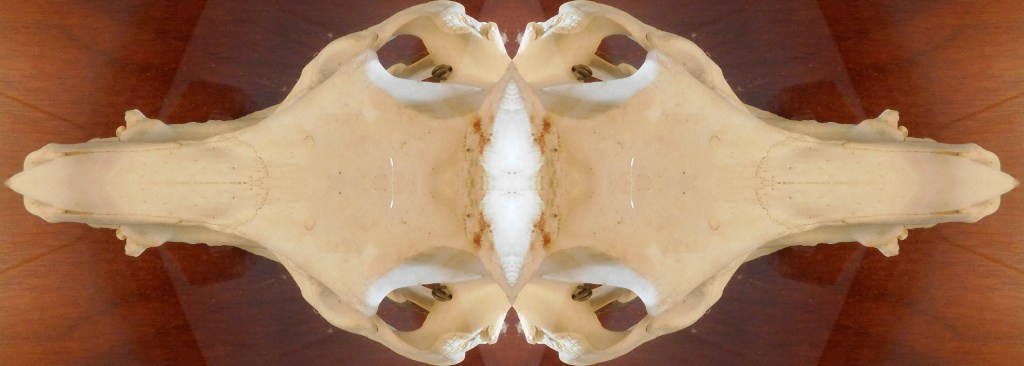
“Artifice Unreal”
Vision Statement:
Human beings have historically relied on their limited physical perceptions to find reason and make sense of the world around them. This ‘making sense of things’ has given rise to the amassment of a vast database of accepted knowledge in every field of study which has piqued the curiosity of mankind since the beginning of time. Our need to label and categorize each new discovery and experience, and subsequently place it in the appropriate field of study, has often led to disputes between the various ologies. Notoriously, theology, philosophy, sociology and the physical and theoretical sciences, have been judged as incompatible, incomparable, and even adversarial in their belief systems. This disunifying categorization of ideas has invariably led to one blind spot after another, one war of ideology after another, and yes, one battered and bruised ego after another. But can one belief system ever completely negate another? I think not. And even if the human race could unanimously agree on which belief system we should follow, how could we ever know if we’re heading toward the purest or truest perception of reality. Third Eye from the Sun will seek to blur the boundaries between ideologies. The film will question the commonly accepted ‘sensible’ nature of reality. It is likely that human beings will never fully unravel the mysteries of the Universe, let alone understand how consciousness affects our perception of what is actually happening here. Can the energy fields emitted by collective consciousness be captured and contained to be selectively deployed as curing agents for the existential threats we humans are currently facing? I don’t know for sure, but intuition is telling me that this fringe ideology is worth a thorough exploration.
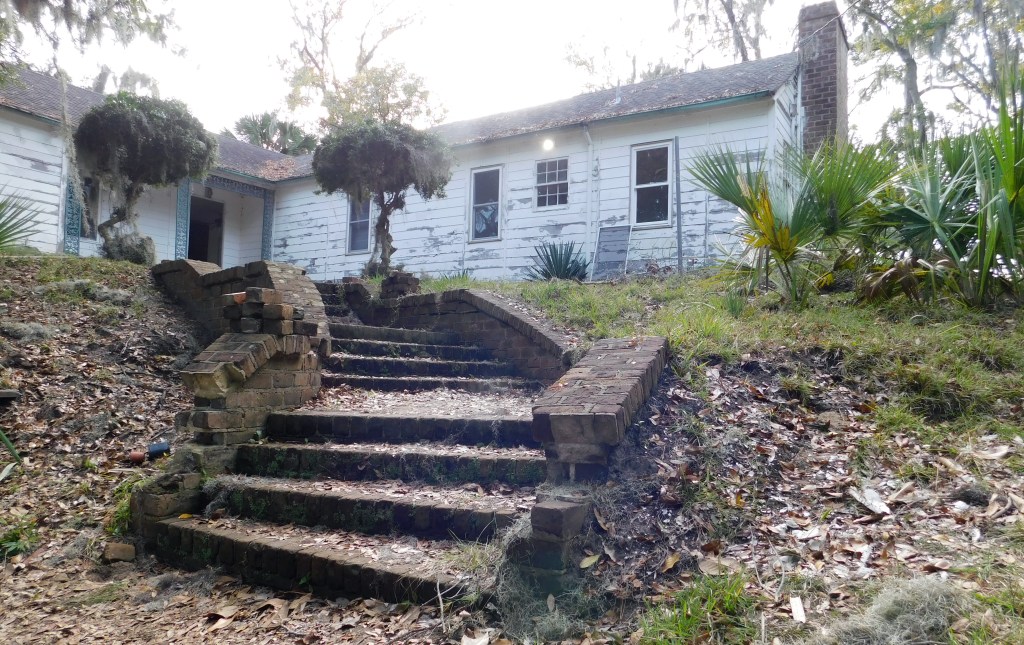
Preferred location for Uncle Neil’s secluded workshop. The place where Maynard will design and build a conscious energy transmitter and receiver. Rose Dhu Island, Chatham County, GA.
Synopsis:
Maynard Otto Barrett, a discredited and disillusioned quantum physicist, finds himself ostracized by family, friends and associates because he’s been increasingly outspoken about his nonconventional theories concerning the nature of human consciousness. As a boy, Maynard’s favorite relative, and the person who introduced him to the wonders of physics and philosophy in the first place, was his mother’s brother, Uncle Neil. Maynard would visit his uncle’s house out on the marshes whenever he was given permission by his mother, but it was only on rare occasions that she would grant him that permission because she didn’t trust her brother’s judgment. Cindy Barrett knew her older brother Neil was always getting completely wrapped up in his crazy experiments and she feared her little boy would be easily influenced by his madcap imaginings. As any good son would, Maynard tried to assuage his mother’s worries about the time he was spending with Uncle Neil, but the more time he spent with him, the more apparent his intrigue became and the less convincing his arguments were. His uncle’s strange stories and ideas were indeed unrealistic, but Maynard truly enjoyed the way he felt when he was hanging out with Uncle Neil in his ad-hoc laboratory. There, he felt like the world was a magical place. A place where anything could happen at any given time.
Maynard’s father had never shown much interest in his son, or anything else for that matter, so when he abandoned Cindy and Maynard just after the boy’s seventh birthday, Uncle Neil became the one and only male role model in young Maynard’s life. Uncle Neil taught his nephew everything he’d learned through a lifetime of studying physics and metaphysics, but the most important thing he taught him was how to think for himself. At ten years old, when his mother informed him that they would be moving away from the rural coastline of southern Georgia to look for better employment opportunities in Atlanta, Maynard rebelled. At first, he tried to reason with her, telling her that they were doing just fine in Shellman Bluff, but he knew how unreasonable that sounded, so his second strategy was to go to his uncle and ask him to talk to his mother. Neil knew his sister well. He knew that when she made a decision to do something, there was really no point in trying to talk her out of it. Maynard and his mom never made it to Atlanta. Instead, they settled in the city of Athens, where Cindy found work at the University of Georgia, the college that Maynard would attend for the first four years of his undergraduate studies. When they first arrived in Athens, Maynard and his mom talked often about returning to Shellman Bluff, at least to visit Uncle Neil, but within months they were both so caught up in building new lives for themselves that they only rarely mentioned his name, and when they did, it was with a nostalgic reverence that left them both shaking their heads in wonder. In the isolated social environment of Shellman Bluff, Uncle Neil’s outlandish ideas had seemed fairly rational, but in the brightly lit and intellectually progressive city of Athens, those same ideas seemed to be completely delusional.
During his graduate studies at the University of Florida, in Gainesville, Maynard attempted to contact his Uncle Neil a couple of times through the mail but never received a response. The last time Maynard had seen or heard from him was the day he and his mom drove out of Shellman Bluff heading for Athens. His uncle had always been an off-the-grid kind of guy. As far as Maynard knew, he had never owned a cell phone and he mistrusted the government to the point of paranoia, so it was understandable that it was difficult to contact him. Every time that Maynard thought about driving north to check on Uncle Neil, something would keep him from it. Years went by, and life went on. Maynard earned a PhD in quantum physics, minoring in philosophy from MIT. He was forty-three, married and living in Cambridge, Massachusetts and his world seemed to be spiraling out of control. For the past twenty years his internal thoughts had been waging war with every exterior source of knowledge that he’d been introduced to during his studies. In both his professional and his personal life Maynard felt like an imposter. He was losing touch with everything that had ever mattered to him, which now included an estranged wife and two children of his own. When he took an honest look back at his life, he realized that the day he said goodbye to Uncle Neil was the day that he had stopped considering the unlimited possibilities of life and had started instead to imagine only the limitations.
Maynard knew that it was time to return to Shellman Bluff. He’d concluded that the only way he could untangle the mess he’d made of things was to return to his uncle’s laboratory to see for himself if the man he knew as Uncle Neil was legitimately insane or simply misunderstood by society. He had no idea whether his uncle was alive or dead, but he knew this journey was likely to change his long-held perceptions about everything and everyone. Against all opposition and inquisition, Maynard leaves Cambridge and heads for Shellman Bluff and his uncle’s home in the marsh. What he discovers there is so far outside the boundaries of his previous experience that it makes him not only question his own sanity, but it leads him down a pathway and into an alternative reality from which he may never return.
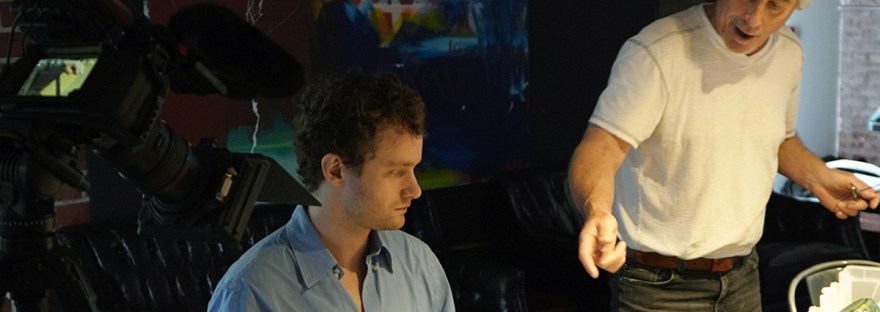
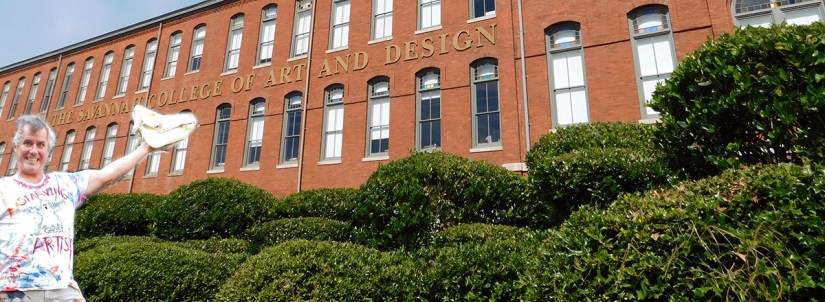
Before I delve into the future, or even the present for that matter, I thought I should revisit the recent past. When I started my studies at the Savannah College of Art and Design on September 11 of last year, I was confident that I could publish regular updates to this blog while also being enrolled in three courses per quarter at the college. I knew that the blog would have to take a backseat to my education at SCAD, but I thought that I could accomplish both tasks simultaneously, as long as I kept my primary focus on the coursework. Within the first couple weeks of classes I realized that it would take all of my creative energies and my undivided focus just to reserve ample head space for the learning curve that would be required for my academic success. Was the past statement wordy? Yes. In short form, it reads more like this – I had to abandon my blog posts temporarily and adopt a new outlet for creative expression, namely the Film and Television Program at the Savannah College of Art and Design.
I feel extremely fortunate to be enrolled as a graduate student at the Savannah College of Art and Design! I’ve completed my first year of studies in the MFA Film and Television Program with a focus on Directing and Experimental Filmmaking. My current unofficial GPA – 3.66. I could never have made it this far without the incredible support of friends and family who have generously invested in my success! Thank you all, I truly appreciate your help!
Now, I’ll move on to a more comprehensive and detailed description of my experiences over the past nine months at SCAD. For readers who are satisfied with the big picture as I’ve already described it, this would be a good place to click your way to some other worthy story on the vast dataspace of the world wide web. Thank you kindly for visiting the “Grand Providentia United” blog site!
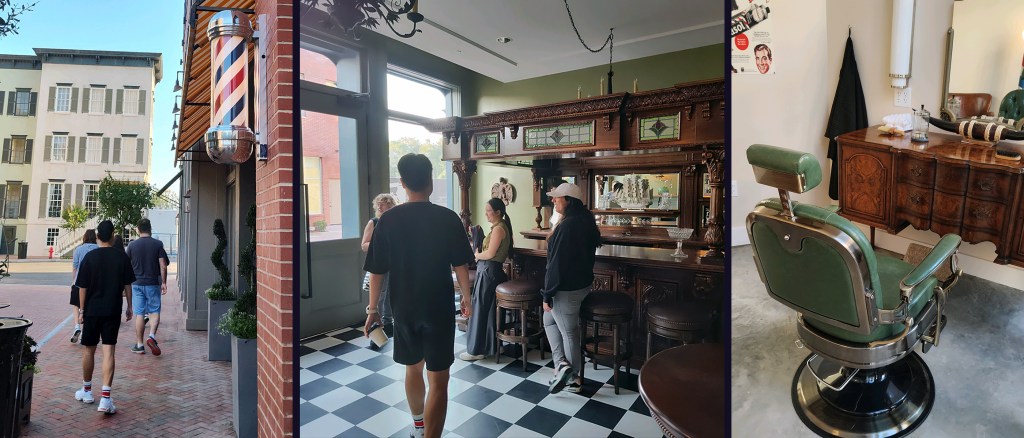
These photos were taken the first time I toured the Backlot at SCAD (September 2023). This is a partial view of Phase 1 of the Backlot project. Phase 2 is currently being built and construction on Phase 3, the final phase (likely to be completed after I graduate in the spring of 2025) has already begun. It’s an exciting time to be learning film production at the Savannah College of Art and Design!
As a sexagenarian and someone who had not been in the role of student at college for more than twenty years, I was quite self-conscious about my age while attending the first few weeks of class at SCAD. My classmates were all at least twenty years younger than me and most of them were obviously well ahead of me in terms of their technological proficiencies and knowledge concerned with the art of filmmaking. This self-consciousness was expected, in truth it had been nagging at me since I made the decision to apply to the program in February of 2022. In the lead-up to the first quarter of classes, I spent many an hour during sleepless nights worrying about my ability to make the grade and ultimately graduate with an MFA in Film. Throughout the first two quarters of classes, a nagging uncertainty dogged me day and night. I badgered myself with constant internal questions: Was I up to the challenge of graduate level studies at my age? Was I delusional, thinking that I could keep up with the academic demands and ultimately make the grade? Was the dream of becoming an independent filmmaker beyond my creative reach? All these questions, and many others, came to a climax at the beginning of the second quarter when I realized how much work was required to make it through just two of the three classes, I’d registered for during the winter session. Toward the end of January, I was so worried about the amount of course work in front of me, that I had an experience that I can only describe as a panic attack brought on by a massive wave of the imposter syndrome. Thankfully, a classmate (a new friend) was there to provide a more positive perspective on my circumstances. He advised me to stop looking at the whole staircase and focus on one step at a time. As soon as he gave me the advice, I realized that it was the same advice that I would have given to someone else if the roles were reversed. This snapped me out of my spiral thinking almost immediately, and once I had returned my focus to the work at hand rather than wasting energy on what-ifs and worries about inadequacies, I was able to prioritize the course work and finish the quarter on a high note. Even more importantly, I was able to relax and do my best work in the third and final quarter of my first academic year in the MFA program at SCAD.
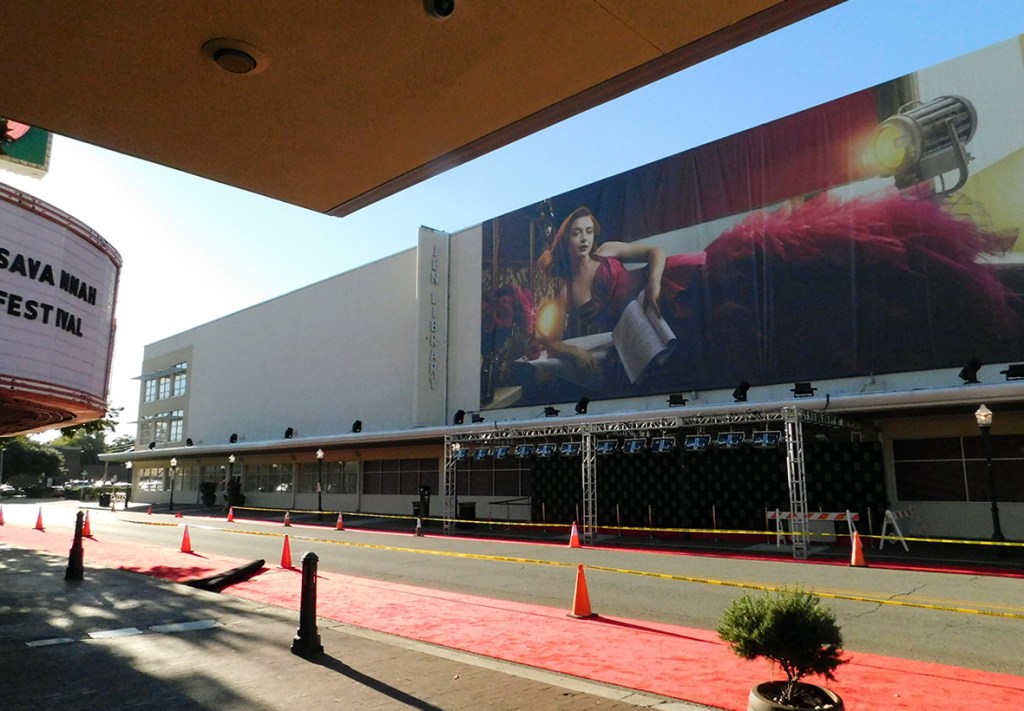
From the 26th Annual SCAD Savannah Film Festival, October 21-28, 2023. What an exciting event it was, albeit a little overstimulating for me, considering that it took place during my first quarter of studies!
Graduate studies at SCAD are said to be comprehensive and fast paced no matter what creative discipline or area of focus you are there to study. In my opinion, that comprehensiveness and learning pace demonstrates that they are adequately earning their tuition fees, and this educational strategy on its own, effectively and continually grows their reputation as one of the top art colleges in the world. One of the things that I’ve come to recognize after finishing my first year at the college, is that I would right now be feeling disappointed and less accomplished had the last nine months been intellectually easy on me. As a result of my struggles, I experience growth, physically, spiritually and intellectually. The way I see it, my first year at SCAD was a great success!
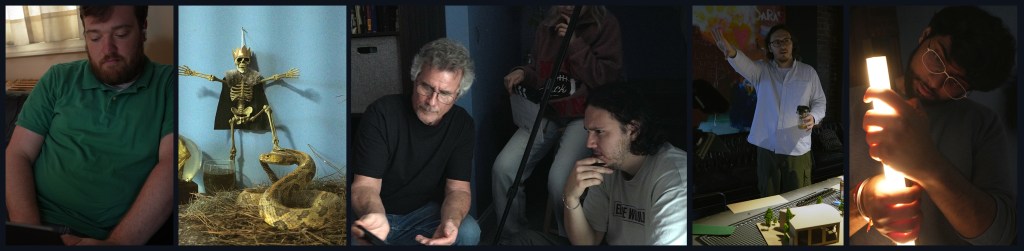
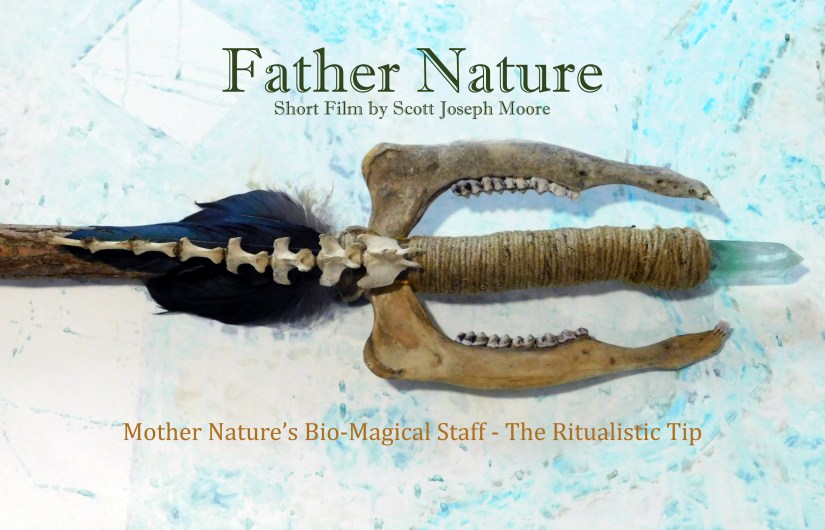
Various BTS photos – Muta, Samantha, Ian, Ved, Eric and ScottLeft to Right – Will – Skeleton King vs. Timber Rattler – Scott, Lilly, Damian – Damian – VedImages above are behind the scenes photos taken on set of Father Nature. Photography by Kris Patel.
Father Nature was the first time I directed a film with a team of talented filmmakers. I wrote the script during December of 2023 and captured the principal photography in February of 24. I edited the film over the course of the Spring quarter, adding sound as I learned the process in Sound Design for Film and Television. There are certain aspects of the film that I am still not satisfied with, but I decided it was time to put it to rest and move on to the next big idea. Something I’ve practiced throughout a lifetime of creating art – know when to say the work is finished.
This film was intended to be a proof-of-concept piece and I was planning to further explore the concept for my thesis project. I decided at the last moment (during the Graduate Review Meeting) to leave further exploration of Father Nature until after graduation. The thesis will instead be a short film introducing the “Grand Providentia Projection”
Over the course of the spring quarter, I decided how I wanted to proceed with my education and the remainder of my creative journey. I enrolled in a class called Experimental Film and there I found an enormous amount of inspiration. One of the driving forces behind my decision to apply to SCAD was inspired by the work of the surrealist filmmaker David Lynch. After taking this course I decided to lean into the surreal – gravitate toward the supernatural – run straight into the horror – experiment with science fiction – and dream a fantastic dream. I want to make films that make people wonder.
Chapter 1 – Traveling into the past and back home again.
All of our memories about the past, at least the ones that are still available to us, can be recalled audibly and replayed visually within our minds, but only to the extent and accuracy that our minds will allow us to remember them. All of our memories have been colored by our personal perspectives, preferences, and the emotions we were feeling at the time the memory was stored. It seems to me that excessively painful, or exceedingly pleasurable, memories take longer to fade, but they are also more likely to be distorted by the emotions we were feeling when we experienced the actual event. Another person who was present and experienced the same event may have an entirely different recollection of what happened. In my opinion, that is one of the most wonderful things about memories – they are not an objective portrayal of the event, but instead they are mental constructs – reenactments that have been specifically designed to help each of us process our life experiences in the most effective way possible. If we learn to seek insight through the painful memories and then willfully release them, knowing that we have gained all the potential for understanding locked in those memories, we can set ourselves free from the pain of our past and bring ourselves closer to being present in the current moment. On the other hand, we can choose to nurture and hold on to the memories that bring us joy and remind each of us of who we truly are. We can learn to archive and selectively preserve memories that serve us well whether they are painful or pleasurable but grounding ourselves in the present moment is the key to using our memories for intentional time travel.
“An Object in Motion”
This is the first chapter of a three-part series describing An Abstract Theory of Intentional Time Travel. Skeptics, cynics and critics, feel free to speak your minds. These thoughts were brought to you by the collective consciousness of humankind.
Update: I’ve added a second film to my YouTube channel. It’s a promotional film about the “Return to Hope” bronze sculpture that I recently repatined and put up for sale. Here is the link in case you’re interested – https://www.youtube.com/watch?v=iyS4elkdsyg&t=46s
Traditionally, concepts of time travel seem to be centered around movement of a physical form, namely the human body, from one specific moment to another along a timeline. The timeline imagined may include multiple dimensions, but more often than not, the concept is simplified by its adherence to a widely accepted belief that there is only one timeline, the timeline of our shared human history. The most common imaginings of time machines have included dials and switches that allow the time traveler to select a specific time, either in the past or the future, that they would like to move their physical form to within the time-space continuum. Usually, this movement cannot technically be equated to movement at all, considering the fact that the time traveler is consistently imagined as arriving at another point along the timeline in the exact same location as they were when they initiated the travelsequence. At this moment in time, I invite you to imagine a whole new theory of time travel – one that is as simplistic and realistic as it is complicated and extraordinary. Based on the concept of a continuous now, this new theory of time travel is available to every human being who is willing to explore the connection between our conscious awareness and what happens next on the timeline of our individual and collective life experiences.
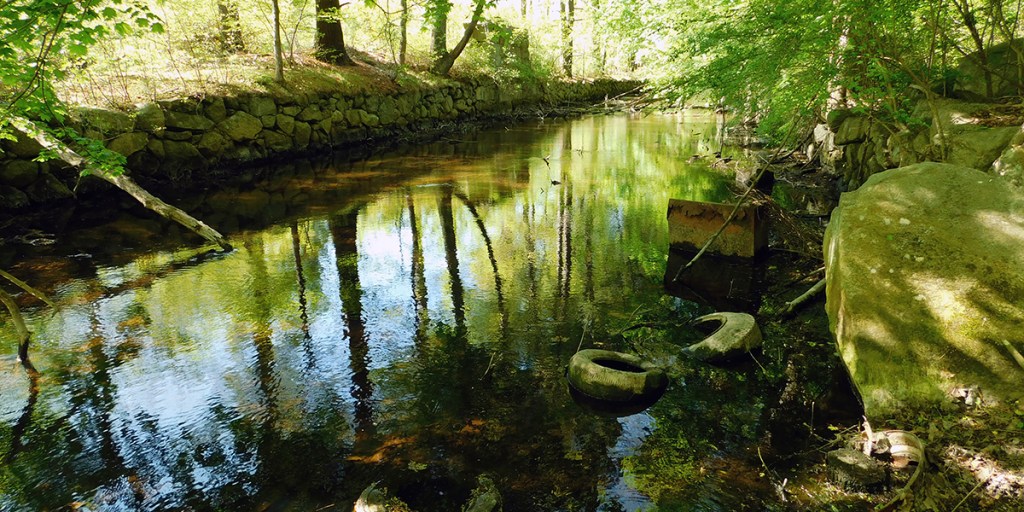
There was a time in my childhood when I thought this was a magic river. Every time I visited its banks, I would be filled with giddy anticipation as to what color the water would be this time. As I matured, I realized that the colors were waste dyes from the textile mill upstream. I revisited this river when I was shooting scenes for the film “Return to Hope” (see link at the bottom of the page). While shooting this photo, I remember feeling both saddened and hopeful simultaneously. It made me sad to see all of the rubbish thrown in the water over the years, but also hopeful, noticing that nature was reclaiming the river itself – restoring the quality of the water and reviving the abundance of life that inhabited these waters before they were polluted by the irresponsible acts of a few misguided individuals.
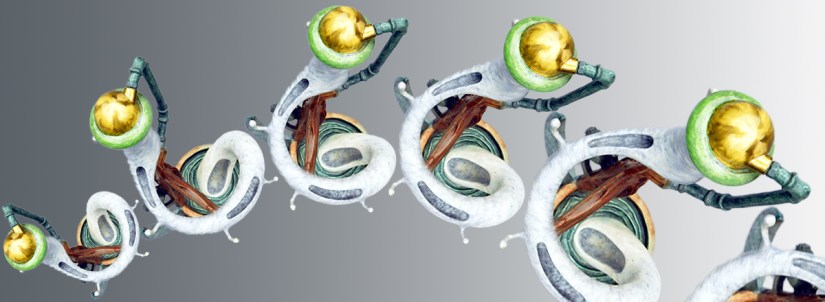
In this moment of now, a moment that we are all experiencing simultaneously, yet experiencing it in as many different ways as there are human beings on the planet, there is a constant and undeniable movement of energies. We are each perceiving these constantly moving energies from our own limited perspective and through the limited capabilities of our five senses. If we allow ourselves to be adventurous enough to include a sixth sense, that of our conscious awareness, we immediately broaden our perspective, and we effectively open our third eye to the true nature of the energies in motion during each and every moment of now. When we witness these energies in motion, and we recognize that we are indeed traveling with time itself, then each moment of our lives becomes much more meaningful. If we learn how to read the energies we are experiencing as we move from the past into the future within the moment of now, then we can more accurately predict what is going to happen next on our timeline. As the moments pass, while we are retaining a conscious connection with the energies in motion, and we also remain present and aware, it becomes apparent that we are traveling through time involuntarily, and we always have been. With our new understanding of the abstract theory of time travel embraced, it becomes so much easier to relax and enjoy the ride.
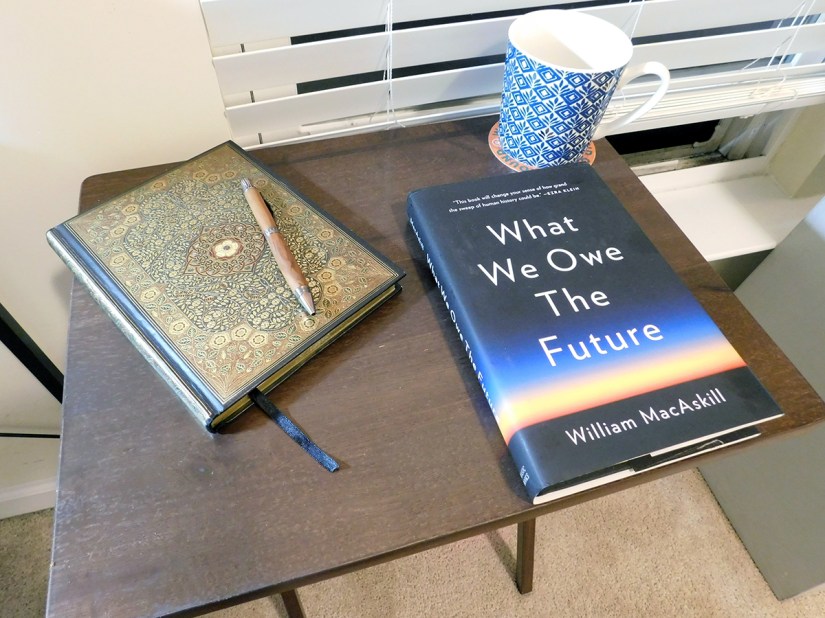
This contemporary philosopher, William MacAskill, penned a decidedly positive prediction about what our collective future has in store for us. I truly enjoyed the book because it was helpful in relieving basic fears about our tendency to destroy more than we preserve.
Update on my own perceptions of the current moment: I’m a bit discouraged and frustrated by my own inability to raise the funds I need to travel from St. Pete, FL back up to Hope, RI during July and August. I’ve been focused on earning money while I’m here at Mike’s studio, but I’ve also been making promotional videos for each of my bronze sculptures in an attempt to make a sale (see headliner photo “Return to Hope” the bronze). So far, my marketing attempts have fallen short of a sale, but I refuse to give up hope. If you would like to support me in my creative journey there are a number of ways you can do just that – there’s the Donate * Contact page on this website – the GoFundMe campaign for the “Florida to Maine Expedition to Gather Film Content” https://gofund.me/9285192b – or you could communicate with me directly through the YouTube channel https://www.youtube.com/channel/UCh2eSJsfi9K63NiLp6Tuhxg or Facebook Messenger https://www.facebook.com/scottjoseph.moore/
I am sincerely grateful that you’ve taken the time to read this online journal. Thank you for being here in the moment of now!